
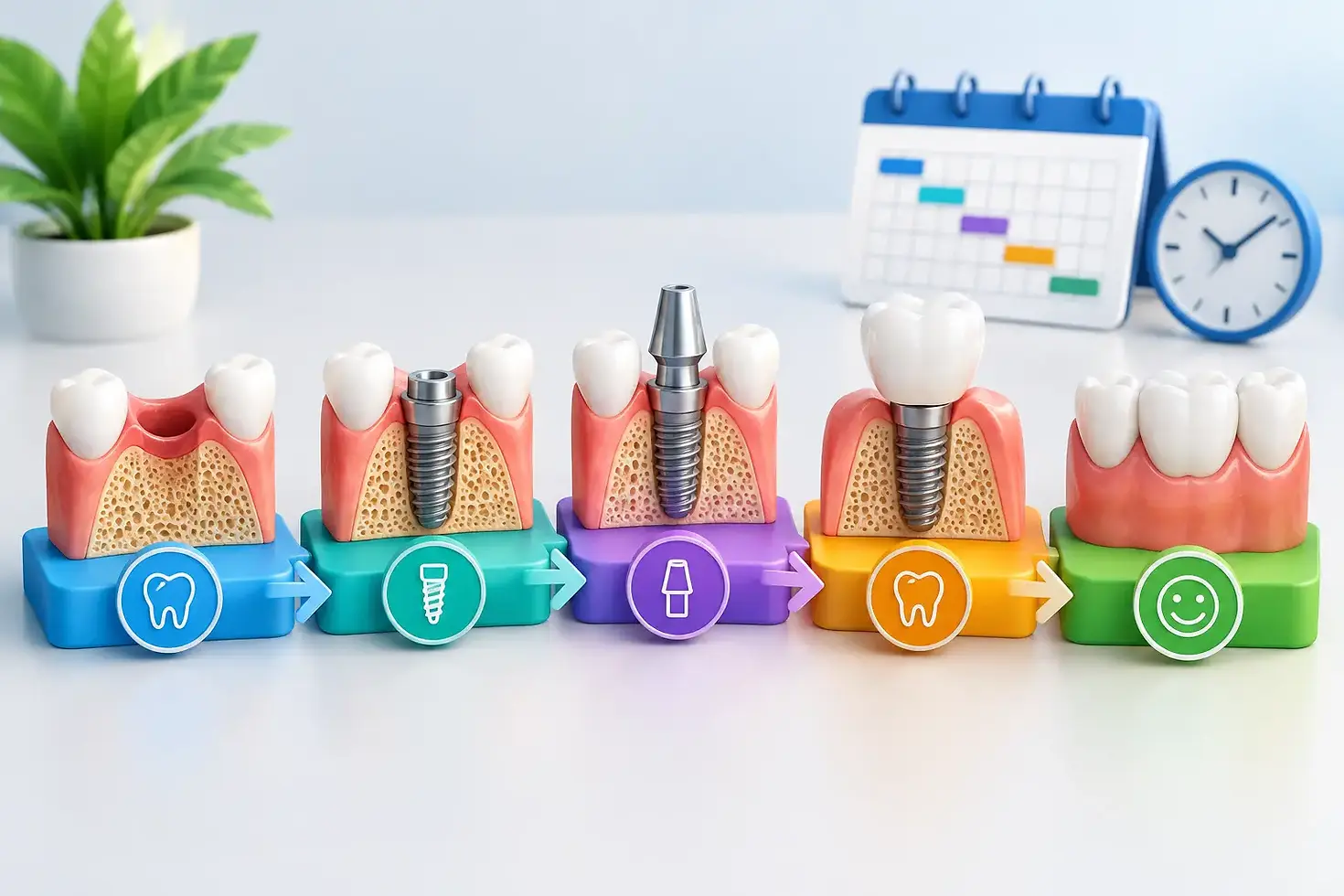
Implant Treatment Staging: Your Timeline

A missing tooth can affect far more than a smile. It can change how you chew, make a bridge or denture less stable, and gradually affect the bone that supports your facial structure. For patients considering dental implants, implant treatment staging turns a major decision into a clear, manageable plan: diagnose the foundation, place the implant when appropriate, allow healing, and deliver a restoration built for daily function.
For patients traveling from the United States to Puerto Vallarta, the timeline matters just as much as the treatment itself. A well-planned staged approach helps you understand how many visits may be needed, how long to stay, when you can travel home, and why some cases should not be rushed.
What Implant Treatment Staging Means
Implant treatment staging is the sequence used to replace one or more teeth with dental implants. Rather than treating every patient with the same schedule, the dentist plans each phase around bone quality, gum health, bite forces, medical history, the location of the missing tooth, and the type of final restoration.
Some patients can receive an implant and a temporary tooth during the same visit. Others need a bone graft, extraction healing, or a longer integration period before the final crown or full-arch bridge is attached. Neither approach is automatically better. The right choice is the one that protects the long-term result.
A staged plan also gives patients a realistic view of cost and travel. It distinguishes what must happen before implant placement from what can safely wait until a future visit. This is especially valuable for patients who have received a high-cost treatment estimate in the United States and want to compare options without sacrificing diagnostic planning or materials.
Stage One: Consultation, Imaging, and Treatment Planning
The first stage begins with a complete evaluation. This typically includes a clinical exam, digital X-rays, and 3D CBCT imaging when needed. Three-dimensional imaging helps the dentist assess available bone, identify the position of nerves and sinuses, and determine the safest angle and depth for each implant.
Planning is also where the final result should guide the surgery. A dental implant is not simply a screw placed in bone. It must support a crown, bridge, fixed hybrid denture, or another restoration that fits your bite, appearance, speech, and hygiene needs. For full-mouth cases, the planning process may include evaluating whether All-on-4, All-on-6, 3-on-6, individual implants, or removable snap-on dentures best match the patient's goals and anatomy.
Bring any recent records, X-rays, or treatment plans from your home dentist if you have them. They can be useful, but a new examination is still necessary. A treatment plan cannot be responsibly confirmed from photographs alone, particularly when bone grafting, gum disease, infection, or complex bite concerns may be involved.
Questions a Good Plan Should Answer
Before moving forward, you should know which teeth can be saved, which need to be removed, whether grafting is recommended, what type of restoration is planned, and whether temporary teeth are possible. You should also receive a clear explanation of anticipated visits and healing periods.
Transparent planning is not about promising the fastest timeline. It is about explaining what is clinically possible and what provides the strongest foundation for your case.
Stage Two: Preparing the Implant Site
Preparation may be simple or it may require additional care. If a tooth is already missing and the bone is healthy, implant placement may be possible promptly. If a damaged tooth needs extraction, the dentist will assess whether the implant can be placed immediately or whether the site should heal first.
Bone grafting is commonly recommended when the jaw has lost width or height after tooth loss, periodontal disease, trauma, or a long-standing infection. A graft helps rebuild the volume needed to support an implant in a stable position. In the upper back jaw, a sinus lift may be needed if the sinus has expanded into the area where an implant is planned.
This stage can add months to the overall timeline, but it can also prevent compromises in implant position and long-term stability. In some full-arch cases, strategic angled implants can reduce the need for grafting. That is one reason an individual assessment matters. A technique that works well for a full-arch restoration may not be appropriate for replacing a single molar.
Stage Three: Implant Placement and Initial Recovery
During implant surgery, the implant post is placed in the jawbone under local anesthesia. Sedation options may be available depending on the procedure and patient needs. Most patients describe recovery as manageable, with swelling, tenderness, and temporary dietary changes during the first several days.
For travelers, allowing adequate recovery time before flying is sensible. The appropriate stay varies with the complexity of surgery. A straightforward single implant may require a shorter visit than multiple extractions, bone grafting, sinus surgery, or full-mouth implant treatment. Your dentist should provide travel guidance based on the exact procedures performed, rather than a generic recommendation.
After surgery, follow post-operative instructions carefully. This includes taking prescribed medications as directed, maintaining gentle oral hygiene, avoiding smoking, and following food restrictions. Smoking and uncontrolled diabetes can significantly affect healing and increase the risk of implant complications. Being candid about health history allows the treatment team to plan more safely.
Stage Four: Osseointegration and Healing
Osseointegration is the process in which the jawbone heals around the implant surface. This biological connection is what allows an implant to function as a stable tooth root. Healing often takes several months, although the timeframe can differ based on implant location, bone density, grafting, overall health, and whether immediate loading is appropriate.
This waiting period can feel inconvenient, but it serves a purpose. Placing a permanent crown or bridge too early can expose the implant to forces before it is ready. In some situations, a temporary restoration is used to preserve appearance while healing continues. Temporary teeth must be designed and adjusted carefully so they do not overload the surgical site.
Patients with upper-front implants may have different cosmetic considerations than patients replacing back teeth. Likewise, a patient receiving a fixed full-arch bridge may follow a different loading protocol than someone receiving one implant-supported crown. The timeline is customized because the forces and goals are different.
Stage Five: Final Restoration and Bite Adjustment
Once healing is confirmed, the final restorative phase begins. The dentist takes digital scans or impressions, selects tooth shape and shade, and creates the final crown, bridge, or full-arch prosthesis. High-quality restorative materials, such as zirconia, are often selected for their strength and natural appearance, particularly in demanding full-mouth cases.
The final fitting is more than a cosmetic appointment. Your dentist checks contacts between teeth, bite balance, speech, comfort, and access for cleaning. A restoration that looks good but has an uneven bite can create excess pressure on implants, natural teeth, or the jaw joint.
For complex reconstructions, a few adjustment appointments may be needed. This is normal. The goal is not merely to deliver teeth quickly, but to deliver a restoration you can chew with, speak with, and maintain comfortably for years.
How Many Trips Will You Need?
The answer depends on the staging required. A simple crown placed on a previously integrated implant may be completed in one visit. A straightforward implant case may involve an initial surgical visit and a later restorative visit after healing. Cases involving grafting, multiple implants, extractions, or full-mouth rehabilitation commonly require more planning and may require two or more trips.
Immediate-load full-arch treatment can sometimes provide fixed temporary teeth shortly after surgery, reducing the time a patient spends without teeth. Still, the temporary bridge is not the same as the final prosthesis. A final restoration is usually made after the tissues have healed and the bite can be refined.
At International Dental Center PV, patients receive a consultation-led plan based on their anatomy and restorative goals, not a one-size-fits-all travel package. With more than 20 years of private practice experience and hundreds of implants placed annually, the focus is on coordinating treatment stages clearly for both international visitors and local patients.
Planning for Long-Term Success
Dental implants require ongoing care. Brush and clean around them daily, attend professional maintenance visits, and use a night guard if you clench or grind your teeth. Implant-supported restorations cannot develop cavities, but the gums and bone around implants can still develop inflammation if plaque accumulates.
Ask about the warranty terms for your final restoration and what follow-up support is available once you return home. A three-year treatment warranty can provide added reassurance, but daily hygiene, routine checkups, and following care instructions remain essential parts of protecting your investment.
The best implant timeline is not necessarily the shortest one. It is the timeline that gives your bone, gums, bite, and final restoration the attention they need. A detailed consultation can replace uncertainty with a plan you can travel for, budget for, and feel confident about.


Comments